


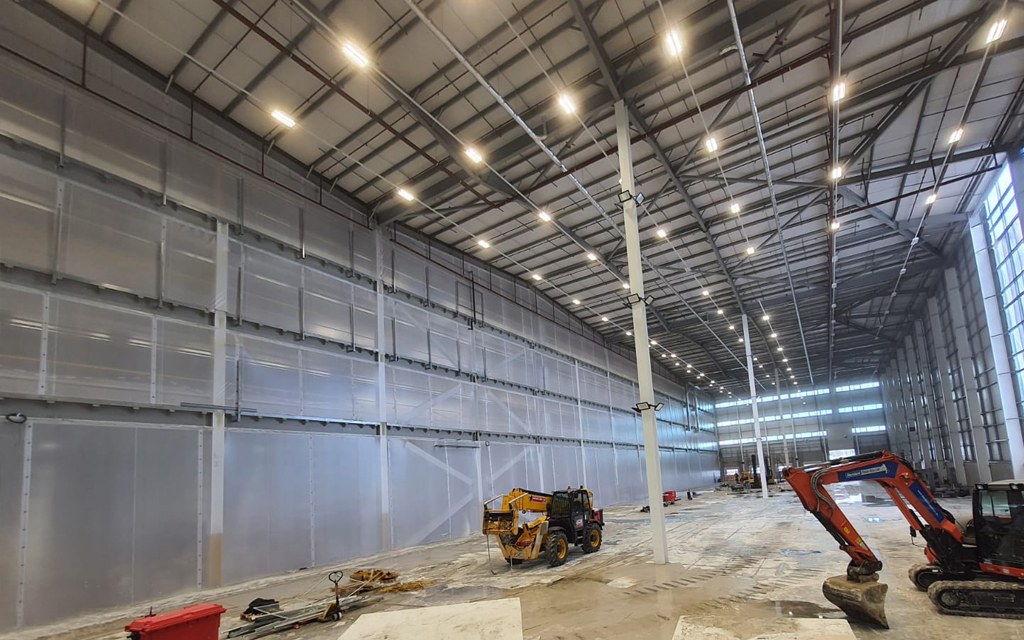
How to reduce dust during data centre construction
For data centre construction, contamination control is critical to keeping the programme on track. Fine dust generated during cutting, drilling and fit-out can compromise required ISO cleanroom standards and settle on sensitive M&E and IT equipment. Once contamination enters these environments removing it can be costly and disruptive. Effective dust control needs to be considered from the outset and maintained throughout the construction programme.
This article looks at why dust control matters on a data centre build, where the dust actually comes from and the practical methods that keep it in check. From site sequencing to physical containment screening. Whether you're closing a new-build shell or working alongside a live data centre, the focus is on keeping contamination out of the spaces that can't tolerate it.
Why dust control matters in data centre construction
In most buildings, construction dust is a nuisance but in a data centre, it's a threat to the equipment the facility is built around. Servers rely on heat sinks, fans and airflow to shed heat and particulate matter degrades every one of them forcing cooling systems to work harder for less. Dust that settles during the build impacts the performance long after handover.
There's a compliance dimension, too. Data centres are typically required to meet ISO 14644-1 Class 7 or Class 8 cleanroom standards before a space can be signed off and those thresholds are unforgiving. A whitespace that looks clean to the eye can still fail a particle count.
The real cost, though, is timing. Contamination that goes unmanaged during the build surfaces at the final clean stage when the programme is at its tightest and there's little to no room to react. What could have been contained early becomes rework: re-cleaning and re-testing which increases the pressure on the handover date. Dust control matters because it protects the equipment, the certification and the schedule.
Prevention vs cleaning: two different approaches
It's worth being clear about a distinction the industry often blurs. Cleaning removes dust that has already accumulated. Prevention stops it spreading or settling in the first place. They're not the same job and they don't happen at the same point in the programme.
A large amount of the published guidance on data centre dust comes from specialist cleaning providers and it's written from their perspective. Focusing on the clean-up stage, once construction is largely done and the particle count has to be brought down to standard. That advice is valuable but it addresses the last line of defence, not the first.
Prevention is the complementary discipline that comes earlier: sequencing works so dusty trades don't contaminate finished zones, controlling movement between dirty and clean areas and physically containing the messiest processes so their debris never reaches sensitive spaces at all. Done well, prevention doesn't replace the final clean; it dramatically reduces how much cleaning is needed and how much risk rides on it.
Common sources of dust on data centre construction sites
You can't contain what you haven't accounted for, so it helps to know where the dust on a data centre site actually originates. A handful of activities generate the bulk of it:
- Concrete cutting, drilling and curing. Core-drilling, chasing and cutting throw fine silica dust and curing slabs continue to shed particulates as they dry.
- Drywall and cladding installation. Cutting and sanding plasterboard produces a light, pervasive dust that travels easily and settles everywhere.
- MEP and ductwork installation. Mechanical, electrical and plumbing works and the ductwork runs in particular, disturbing and distributing dust through the very cavities air will later move through.
- Foot traffic between external and internal areas. Dirt and grit tracked in on boots and wheels is a constant, low-level source that's easy to underestimate.
- General trade activity in adjacent or overlapping zones. On a live programme, several trades work in parallel and dust generated in one area readily migrates into another that's supposed to be clean.
The pattern is clear: dust rarely stays where it's made. Left unmanaged, it drifts across work boundaries and into the zones least able to tolerate it.
Prevention methods for reducing dust during construction
Reducing dust is less about any single measure than about layering several so they reinforce one another. A practical prevention strategy on a data centre build usually draws on all of the following:
- Plan site logistics. Establish hard-surface walkways and defined haul routes so dirt isn't tracked across the site. Well-planned movement keeps grit out of the building before it becomes airborne.
- Sequence the works. Order trades to minimise contamination, for instance, completing overhead MEP and ductwork before raised floors go in so dust from the messy work above never settles into finished flooring below.
- Control entry and exit. Fit walk-off mats and set up controlled access points into sensitive zones so people and materials pass through a managed boundary rather than an open one.
- Manage air pressure. Maintain positive air pressure in critical spaces to push contamination out rather than let it drift in and change filters regularly so the system keeps performing as intended.
- Restrict access during dusty phases. Limit who and what enters critical areas while the dustiest work is underway. Fewer movements through a clean zone means less opportunity for contamination.
- Contain the source. Use physical screening to segregate dusty processes from fit-out and live areas entirely. This is the most direct method because it stops dust at the point it's generated rather than managing it once it's loose.
Sequencing and logistics reduce how much dust is created and moved while containment deals with what's left. Together they take the pressure off the final clean and protect the programme's most sensitive spaces throughout the build.
Benefits of dust containment screens
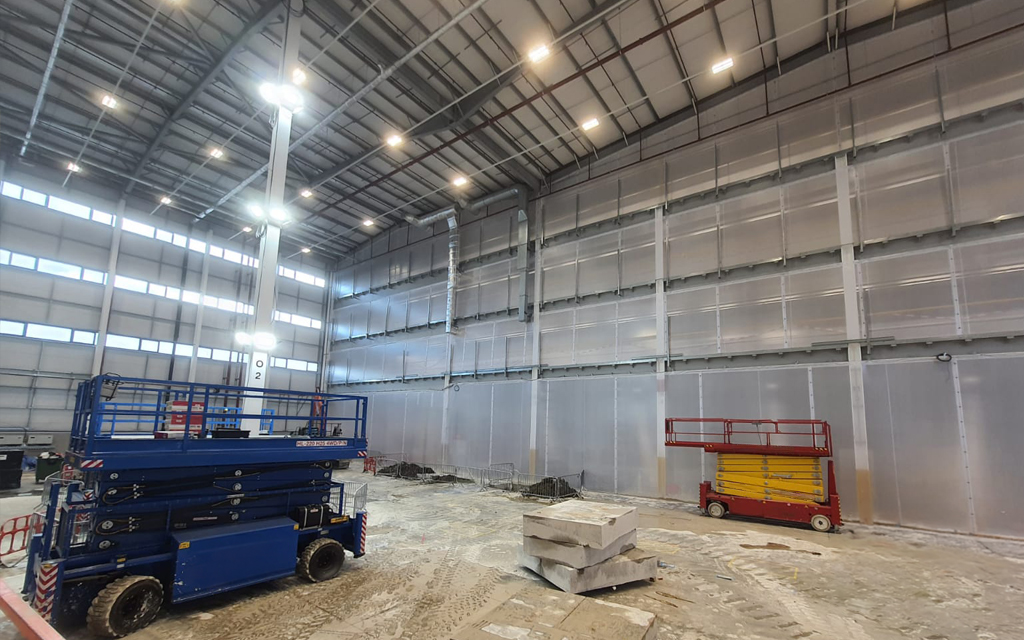
Of all the prevention measures available, physical containment does the most decisive work because it draws a hard boundary rather than simply managing risk on either side of an open one. A dust containment screen physically segregates the dusty end of construction from the fit-out zones and server-installation areas that can't tolerate contamination.
Flexiscreen is engineered for exactly this. Suspended floor-to-ceiling from the building's existing steelwork, it forms an over 99% dust-tight seal around ducts, pipes, steelwork and at ceiling level (the awkward junctions where contamination usually escapes) and can be specified to meet ISO Class 7 cleanroom standards where the environment demands it. Antimicrobial fabric options extend that protection into the most sensitive areas.
By keeping a completed zone sealed against the works next door, containment lets that zone be commissioned and handed back while construction carries on elsewhere enabling early phased handover rather than a single hold-everything clean at the end. Thanks to the systems modular nature, it's reusable and reconfigurable: the same screening can seal one area in an early phase then be relocated and rebuilt to contain a different zone as the programme moves on.
Protecting live data centres
The hardest dust-control brief isn't a new build, it's expanding or refurbishing next to a data hall that's already running. Contamination in this environment isn't just a quality risk to finished works; it's a direct threat to live, revenue-generating equipment metres away. A single breach of construction dust into the operational environment can jeopardise the active servers that keep the facility online.
The answer is complete separation. Sealed boundaries wall the works off from the live space, controlled access points govern every movement in and out meaning the operational hall stays isolated from the dust generated alongside it. Construction proceeds behind the screen and the data centre keeps serving as though nothing were happening next door.
During a refurbishment beside a fully operational data hall, sealed Flexiscreen containment held the boundary between active works and the live environment throughout. No dust ingressed into the running space and no disruption to uptime while the programme progressed.
Choosing the right dust control approach for your project
The right approach depends on the project in front of you. Before you specify a solution work through these questions:
- New-build or live? Is the area a new-build shell, or a live, operational space where contamination would threaten running equipment?
- Which ISO standard? Does the project need to meet a specific cleanroom classification – ISO Class 7 or 8 – before handover?
- Would phased handover help? Are there completed zones that, if protected from ongoing works, could be signed off and released early to ease the programme?
- Design out, or contain? How much of the dust risk can be engineered out through sequencing and logistics and how much needs physical containment to manage?
- Reuse across phases? Will containment need to be relocated or reconfigured as the works move through the site?
The answers rarely point to a single measure, most programmes combine sequencing, access control and containment in the right proportions. If you're not sure where the balance lies for your project, read our data centre screening solutions guide – get in touch and Westgate Global's screening experts can assess your site and specify an approach that fits.
FAQs
What's the difference between dust prevention and dust cleaning on a construction site?
Cleaning removes dust that has already accumulated; prevention stops it spreading or settling in the first place. Cleaning is the final-stage discipline that brings a space to standard before handover, while prevention runs throughout the build – access control and containment that reduce how much dust is ever released. The two work together: strong prevention means far less to clean and less risk of contaminated surfaces late.
What ISO cleanroom standard do data centres typically need to meet?
Data centres are generally required to meet ISO 14644-1 Class 7 or Class 8 before a space can be handed over. Which applies depends on the facility and the zone but both are strict enough that a whitespace can look clean and still fail a particle count which is why dust has to be managed during the build, not just cleaned up at the end.
Can dust containment screens help achieve early phased handover?
Yes. By sealing a completed zone against dusty works elsewhere on site, containment keeps that zone at standard while construction continues around it so it can be signed off and released to the client early, rather than waiting for a single handover once the whole programme finishes. Finished space becomes usable sooner.
How is a live or operational data hall protected from nearby construction dust?
Through complete physical separation. Sealed screening walls the construction works off from the live environment and controlled access points manage every movement between the two so dust generated by the build can't migrate into the operational space. The result is that expansion or refurbishment can happen metres from running servers without putting them at risk.
Can dust containment screening be reused across multiple project phases?
Yes. Modular screening such as Flexiscreen is designed to be dismantled, relocated and reconfigured as the project evolves. Containing one area in an early phase, then protecting a different zone later. A single system flexes across the programme rather than being stripped out and replaced each time the works move on.
Conclusion
On a data centre build, dust is never just dust it's a risk to sensitive equipment and to cleanroom certification. Managing it well means treating prevention as the first line of defence: sequencing works to create less dust, controlling movement between dirty and clean areas and physically containing the messiest processes so contamination never reaches the spaces that can't tolerate it.
Westgate Global's dust containment screening is built for exactly these demands. Sealing works off to ISO Class 7 standard, enabling early phased handover and protecting live data halls through nearby construction, all managed by one accountable partner from survey to sign-off.
Planning a build, expansion or refurbishment? Get in touch with the Westgate Global team. We'll assess your site and specify the right dust control approach to keep your programme clean and on schedule.
Related Posts
Insights 24 September 2026