Heat load testing: hot and cold aisle containment explained
As data centres take on growing AI workloads, the processing power behind them generates immense heat. Without accurate temperature control, this thermal energy can result in hardware malfunctions, damage components, or cause costly downtime. This article explains why hot- and cold-aisle containment is critical to designing, specifying, and maintaining effective data centre cooling systems.
What is Hot Aisle Containment (HAC)?
Hot aisle containment (HAC) works by enclosing the aisle where equipment exhausts its hot air. Cabinets are arranged back-to-back, with the shared aisle between them sealed off: cool air enters from the front, passes through the equipment and picks up heat, and is then captured in the enclosed hot aisle. This configuration means the hot air is captured and directed straight to the cooling units (CRAC/CRAH) rather than letting it escape into the wider room.
HAC is well suited to modern, higher-density environments, offering improved cooling efficiency and clean separation of supply and return air. It also offers strong scalability as rack densities increase, as well as compatibility with both established and emerging cooling strategies.
During a heat load test, this setup allows engineers to measure the actual temperature of the exhaust air and see exactly how effectively the cooling system removes it. For a deeper look at this, see Hot Aisle Containment for Data Centres: Westgate Global's Flexible Solutions.
What is Cold Aisle Containment (CAC)?
Cold aisle containment (CAC) takes the opposite approach: it encloses the aisle where cool air is supplied to equipment, keeping that intake air isolated from the rest of the room. It's frequently used in raised-floor environments, making it ideal for retrofit projects.
The key difference from HAC is how the hot return air is managed. Rather than being routed through a closed duct system, the hot exhaust air in a CAC setup rises into the room and returns to the air cooling systems by moving through the room, rather than through a contained path.
CAC brings its own set of strengths. It offers consistent equipment inlet temperatures, reduced bypass airflow, improved cooling efficiency, comfortable working conditions for technicians outside the contained aisle, and easier retrofitting.
During testing, CAC enables engineers to verify that inlet temperatures stay within specification across the full simulated load, rather than drifting as warm air creeps in from elsewhere. For more detail on this, see Cold Aisle Containment: Boost Data Centre Efficiency with Westgate Global.
HAC vs CAC: which approach fits your facility?
Hot aisle containment and cold aisle containment both achieve the same objective: they prevent hot and cold air from mixing. By managing the airflow path, both methods can improve cooling efficiency by reducing unnecessary demand and maximising the capacity of the cooling infrastructure. Choosing between the two depends heavily on the facility itself.
Raised-floor environments, where cold air is delivered through perforated floor tiles in the floor void, are well suited to CAC. It can be built around the existing underfloor supply with minimal disruption, which is why it is often the more straightforward option for retrofit projects.
Slab environments, without that underfloor supply, more commonly favour HAC, which contains and extracts the hot exhaust air directly. Because HAC relies on a return path, typically an overhead plenum feeding back to the cooling units, it is a natural fit for new-build environments, where the infrastructure can be designed into the layout from the outset rather than added afterwards.
Neither approach is better than the other. The decision comes down to the facility's existing infrastructure, floor type and layout. Getting this right early avoids costly rework later, which is why it's worth working through these factors carefully before specifying a containment strategy.
Why containment matters for cooling efficiency and cost
The high-powered servers, processors, and electrical infrastructure that make up modern data centres generate an extraordinary amount of heat. As rack densities continue to rise, that trend shows no signs of slowing. Without precise temperature control, the heat produced can trigger hardware malfunctions, degrade or damage components over time, and, in the worst cases, cause costly downtime, both financially and operationally.
Containment is what keeps this manageable. Physically separating hot exhaust air from cool supply air prevents the two from mixing and keeps cooling systems from working harder than necessary to compensate.
The result is more predictable equipment inlet temperatures, less strain on the cooling infrastructure, and a lower risk of thermally related failures. In addition to translating directly into lower operating costs, proper containment can ensure the data centre is more resilient, reducing the risk of costly downtime as rack densities continue to climb.
Why heat load testing needs containment
Before a data centre goes live, its cooling system has to be proven under real thermal stress. Heat load testing uses a loadbank to safely simulate the heat a server hall will generate at full capacity, allowing operators to verify that the cooling infrastructure will meet the hall's needs.
Failing to run accurate heat load testing at the commissioning stage could result in underspecified cooling systems that only become apparent once the data centre goes live - a risk most operators can ill-afford to take.
While heat load testing is a critical step in data centre commissioning, it is only as good as the test conditions themselves. Without containment, hot exhaust air and cold supply air mix freely in the room, skewing the readings the test is meant to produce.
Containment solves this by physically separating hot and cold air streams, so the temperatures measured during testing reflect what will actually happen once a live IT load is running in a properly contained environment.
How temporary containment screens support heat load testing
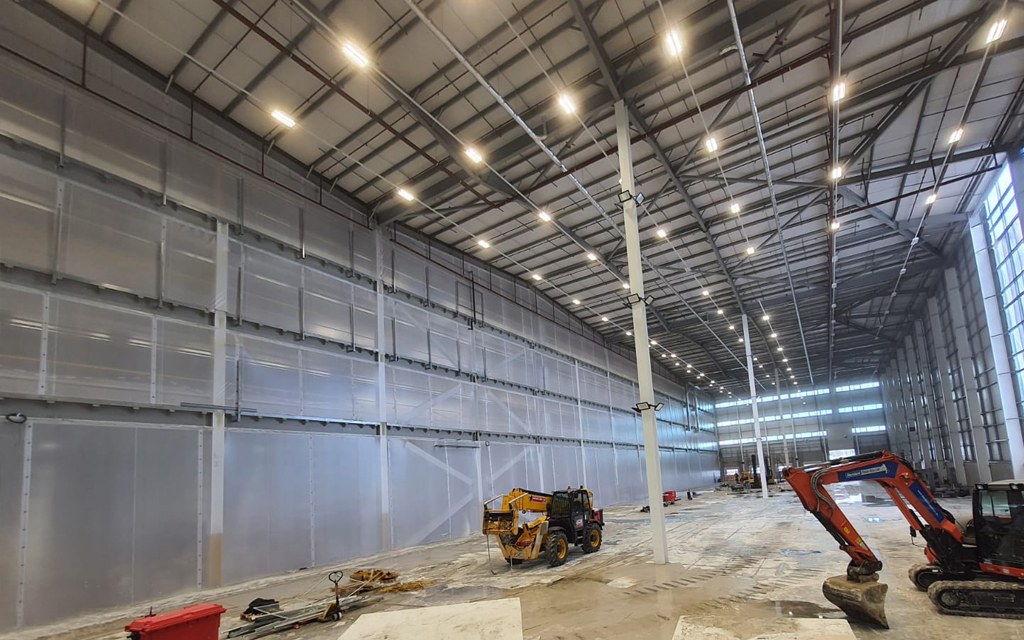
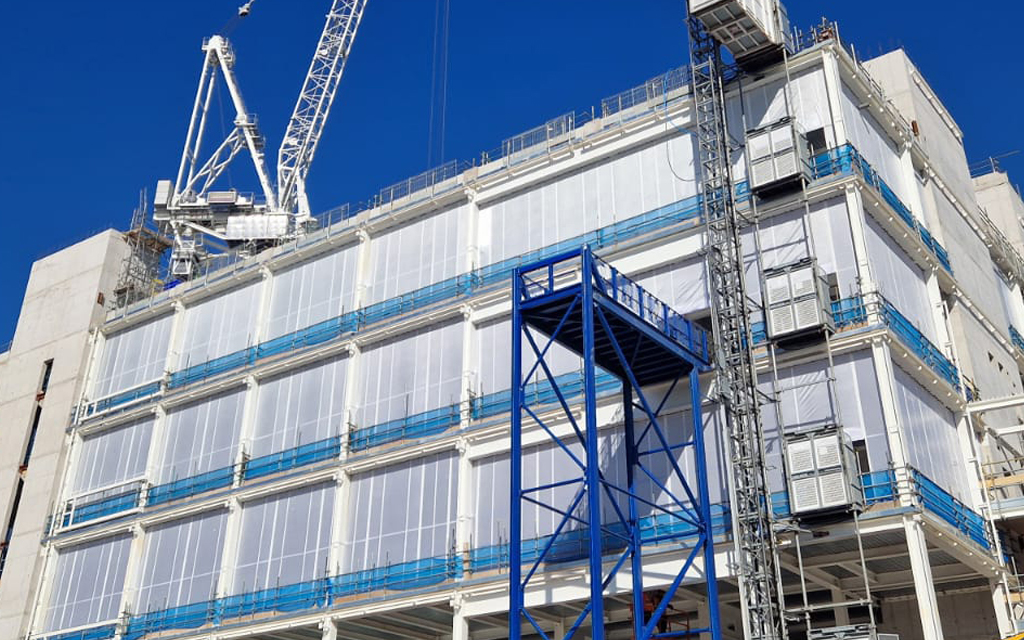
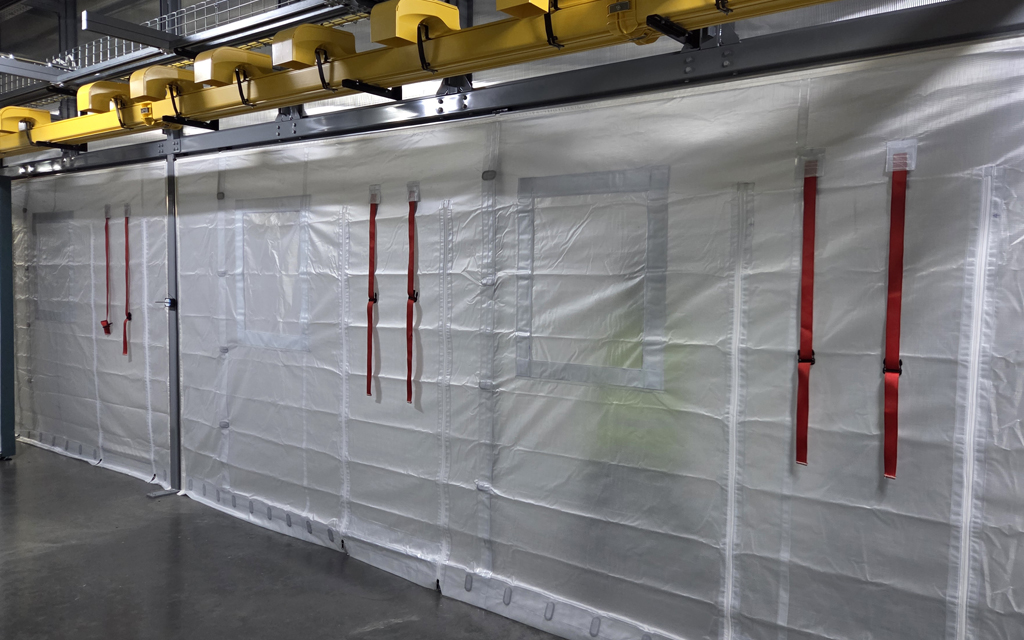
Temporary containment screens offer a practical way to keep the schedule moving: by creating hot- and cold-aisle separation ahead of the permanent fit-out, they allow heat-load testing to begin earlier in the programme, rather than holding it back until permanent containment is installed. Flexiscreen, Westgate Global's temporary screening solution, is designed for exactly this kind of use.
During testing, engineers still need access to the equipment. The Flexiscreen temporary HAC incorporates built-in access panels and heat bank openings that allow monitoring and adjustment to continue without breaking containment. Because the screens are a temporary installation, they can be fitted and removed without leaving marks or damaging the finished whitespace.
For contractors working across multiple phases or sites, the screens are reusable and relocatable. The same screens that support testing on one project can be redeployed on the next, making it a cost-effective way to bring commissioning activities forward.
What to check when assessing containment performance
Effective containment ensures that air stays where it's meant to. Paying attention to the details makes the difference between effective and ineffective containment.
- Cable openings are one of the most common weak points. Even small, unsealed gaps around cable entries let hot and cold air mix, undermining the separation the containment is meant to create.
- Correct fitting of the panels also makes a big difference. If any are fitted slightly out of alignment, it can break the continuous barrier between aisles and let air leak through. Similarly, a door that doesn't seal properly quickly creates a gap in the system.
- In raised-floor environments, the placement of perforated tiles can impact containment. In this kind of configuration, cool air is pushed into the void beneath the floor with perforated tiles placed at specific points to let the cooled air rise up through the floor and into the equipment intakes. If a perforated tile sits in the wrong spot, or if too many are clustered in one area, they can starve one area of cooling while over-supplying another.
None of these are dramatic failures on their own, but together they can impact whether containment is genuinely doing its job.
Choosing the right containment approach for your project
The right containment solution depends on where a project sits in its lifecycle and what it's being asked to achieve. Before specifying an approach, it's worth working through a few key questions:
- Is this for ongoing operational containment, or temporary containment to support testing before handover?
- Is the facility raised floor or slab?
- Is this a new-build or retrofit project?
- What access is needed to equipment during testing? Do you need panels, loadbank openings, or similar?
- Will the containment need to be reused or relocated across project phases?
- Who will be managing the design, installation and sign-off?
The answers shape everything from the type of containment specified to how and when it's installed, and getting them wrong early can mean costly rework down the line. If you're weighing up the options for a specific project, Westgate Global's team can help identify the containment approach best suited to your facility and programme.
FAQs
What's the difference between hot aisle containment and cold aisle containment?
Both containment strategies improve airflow and cooling efficiency by separating hot and cold air. The main difference is how the airflow is handled.
| Hot Aisle Containment | Cold Aisle Containment |
| Hot aisle containment encloses the hot exhaust path at the back of the racks.
|
Cold aisle containment encloses the cool air intake path in front of the racks.
|
| Uses physical barriers and ceiling plenums/ducts to channel heat back to the air-conditioning units.
|
Doors and roof panels seal off the aisle, where servers draw in cool air, trapping it inside.
|
| The physical barrier means the main server room stays cool.
|
The rest of the open data centre room serves as the hot-air return path so that the surrounding server room can get warm.
|
| Good for raised-floor environments and high-density, modern sites, where containment can be built into plans from the outset.
|
Easier to retrofit to existing data centres.
|
Why is containment needed for heat load testing specifically?
Heat load testing uses a loadbank to mimic the load that a server hall would see under real operating conditions. This allows operators to verify that the cooling systems would as they should. Without proper containment, the hot air generated by the loadbanks as part of the testing process will simply mix with the cooled air in the server hall. This mixing will skew the test readings, which in turn could mean cooling systems are incorrectly specified. Temporary containment during testing physically separates hot and cold air streams, yielding more accurate measurements.
Can HAC screens be installed without disrupting a live or nearly-complete whitespace?
Temporary HAC screens are designed to be installed and removed without causing any damage to the whitespace or creating dust and debris associated with traditional building works.
Can the same HAC screens be reused across multiple test phases or projects?
Our temporary HAC screens are modular, relocatable and reusable, allowing them to be moved easily as the project progresses, or stored for future heat load testing. Reducing costs and supporting sustainability targets by reducing site waste when compared to traditional plastic sheeting methods.
How do engineers access equipment during a live heat load test?
Engineers can access equipment mid-test through access panels and heat bank openings built directly into the enclosure, without having to break down and rebuild the containment.
Why use Westgate Global’s Temporary HAC screen instead of traditional corrugated plastic sheeting?
Westgate Global’s temporary HAC system allows for highly accurate aisle emulation, providing more reliable data when compared to traditional solutions used during heat load testing. The system fully seals around steelwork, additional services and penetrations.
Conclusion
Getting containment right is what makes cooling systems trustworthy, both in testing and in live operation. Whether it's HAC or CAC, the right approach depends on the specifics of the facility, and the accuracy of any heat load test depends on getting containment right before the loadbanks are switched on.
For projects where permanent containment isn't ready in time, temporary solutions like Flexiscreen Temporary HAC screens mean that testing doesn't have to wait. With built-in access panels and heat bank openings, and the flexibility to be reused across phases and sites, they enable commissioning teams to test their cooling systems more accurately earlier in the programme.
If you're planning heat load testing or reviewing your containment strategy for an upcoming project, the Westgate Global team can help you find the right approach for your facility, timeline and budget. Get in touch.
Related Posts