


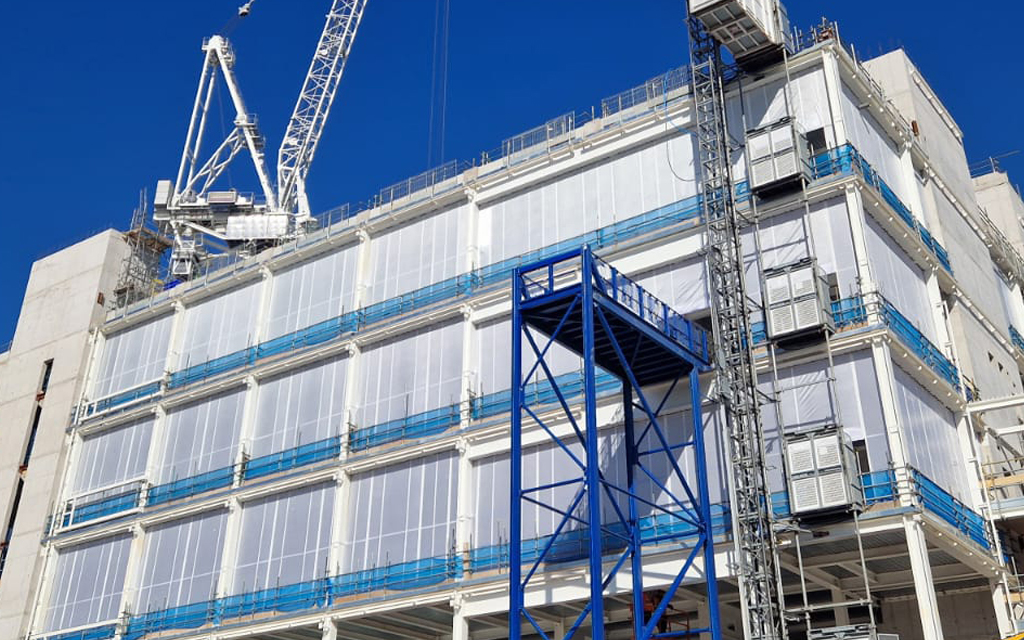
A guide to data centre screening solutions
In data centre construction, even a small loss of environmental control can have a significant impact on the programme. Temporary engineered screening helps manage that risk by creating controlled barriers during construction, fit-out and refurbishment. These systems can protect open structures from weather, contain dust and support temperature control where it is needed while allowing surrounding works to continue. Unlike scaffold sheeting or fixed hoarding, screening can provide a more complete seal around exposed or live areas without unnecessarily restricting progress elsewhere on site.
This guide covers the three types you'll most often specify: weathering screens that shield an open envelope from wind and rain; dust containment screens that keep debris out of clean fit-out and server-installation zones; and temperature protection that creates hot and cold aisle containment ahead of commissioning. Along the way, we'll look at how to choose the right solution for your project.
What is data centre construction screening?
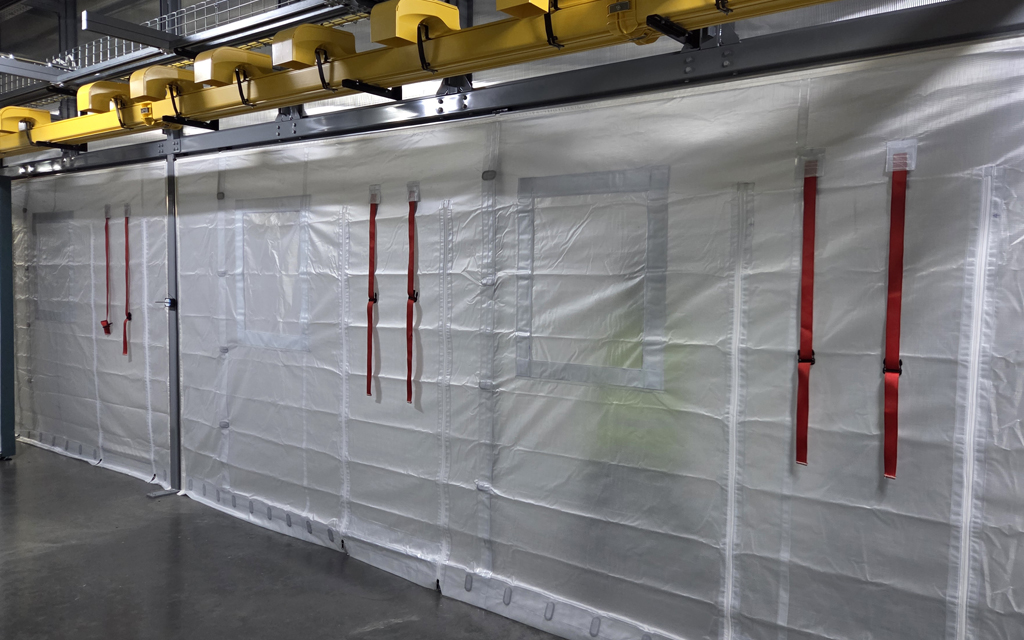
Data centre construction screening is a category all its own. Forget scaffold-and-sheet, or the plywood hoarding that lines a typical building site, this is engineered, temporary screening designed to seal an open structure against weather and dust while the programme keeps moving beneath it. Systems like Flexiscreen suspend floor-to-ceiling from the building's existing steelwork, creating an over 99% weather- and dust-tight barrier that meets ISO Class 7 cleanroom standard where required.
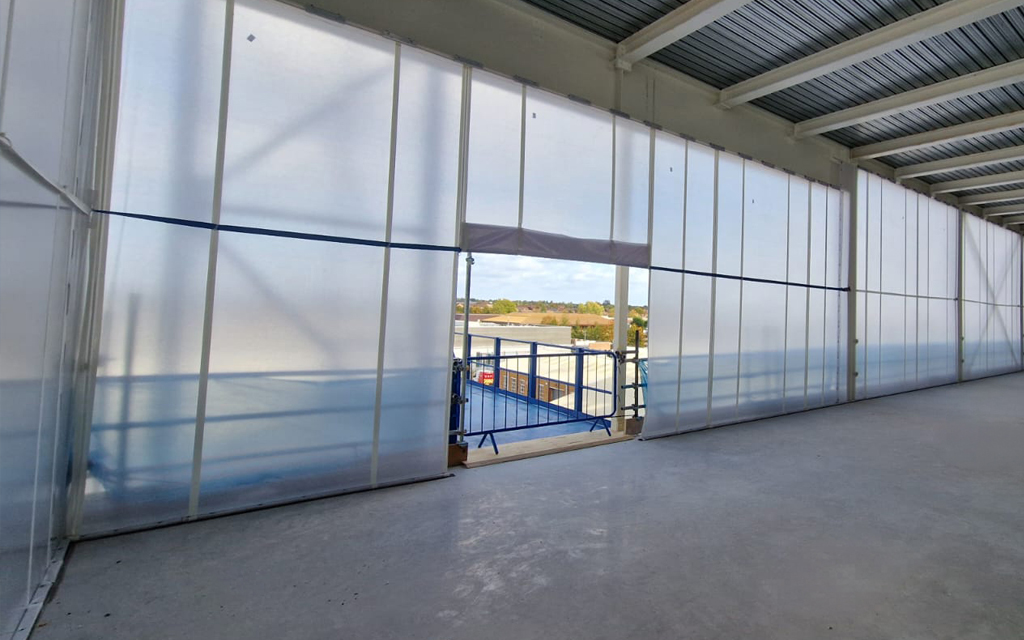
So why does a data centre demand this, when a warehouse might make do with less? The margins of a data centre build are unforgiving. Schedules are tight and the critical path governs everything. Works frequently run alongside live, operational data halls that cannot afford a moment's downtime and they’re housing sensitive M&E and IT equipment. This is exactly what the dust and moisture ordinary hoarding was never built to stop.
Why temporary screening matters on data centre programmes
On a data centre build, the weather is a scheduling problem in disguise. Leave a structure open to wind and rain and the critical path stalls, internal works wait, trades stack up and the completion date slips a day at a time. Effective screening severs that dependency, sealing exposed sections so fit-out can continue regardless of what's happening outside.
Dust is the quieter threat. Once fit-out begins, airborne debris from adjacent works can contaminate clean zones and settle on the M&E and IT equipment the facility is built around. The kind of contamination that means rework, or worse, compromised machinery. A screen that contains dust at source keeps sensitive areas genuinely sealed.
The risk climbs higher still when expansion happens next to a live, operational data hall. Here, screening isn't just protecting a programme it's protecting continuity, keeping active works and running servers firmly apart.
When zones are properly sealed and protected, completed areas can be signed off early. Phased handover turns a finished corner of the build into value the client can use now, not months down the line.
Types of temporary data centre screening solutions
Screening isn't a single product, it's a family of engineered solutions, each matched to a different risk and a different phase of the build. A hyperscale shell being closed against a winter storm needs something quite different from a fit-out zone being sealed off from a running data hall next door.
The art lies in specifying the right system for the job: weather protection where the envelope is still open, dust containment where clean works have begun and hot and cold aisle containment when commissioning approaches. The three below cover the ground most data centre programmes need.
Weathering screens
Weathering screens exist to break the programme's dependency on the forecast. Seal an open façade with an engineered screen and the works that usually wait for good weather, like concrete pours, curing, cladding, internal fit-out, can carry on regardless. The building doesn't need to be permanently watertight for the trades inside it to keep moving.
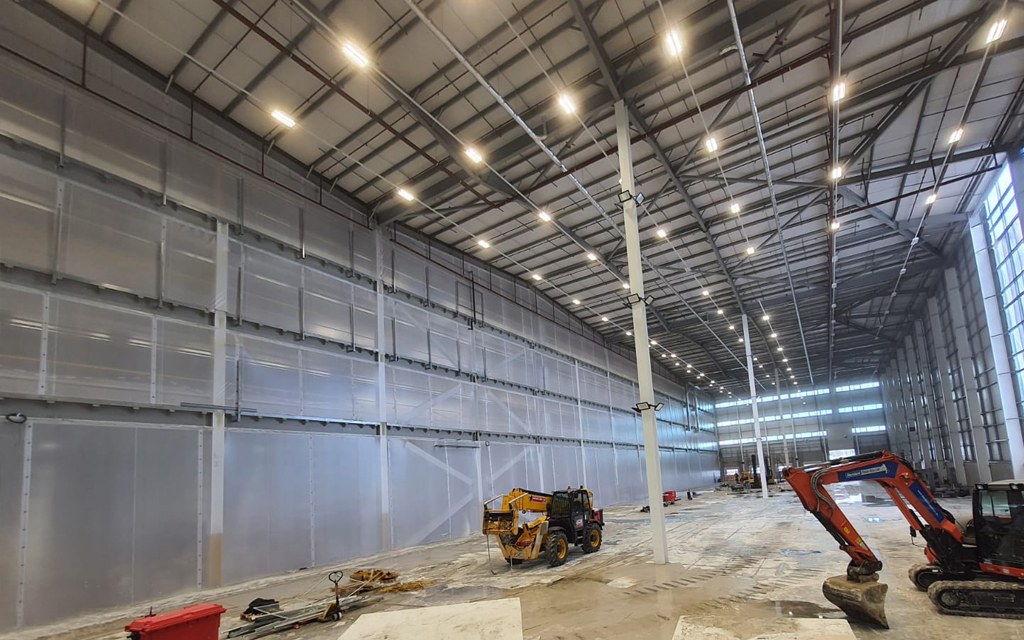
Westgate's Flexiscreen is built for exactly this. Suspended floor-to-ceiling from the existing steelwork, it shields open structures from wind and rain while regulating temperature and cutting noise transmission. No small thing on a site running two shifts beside occupied buildings. Its thermal performance holds curing conditions stable through a cold snap, while the sound reduction properties keep disruption down.
Crucially, for the exposed, high-rise elevations typical of a data centre shell, every installation is backed by wind load calculations and structural design support, so the screen performs when the weather turns rather than becoming a liability of its own.
Dust containment screens
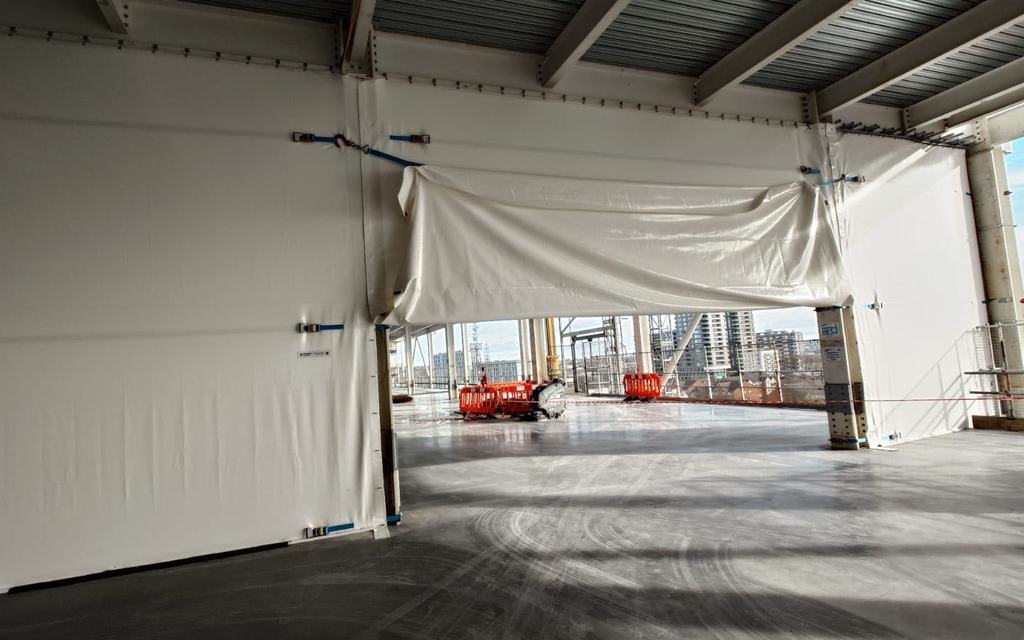
Where weathering screens face outward, dust containment screens work inward. Segregating the dusty, disruptive end of construction from the clean zones where fit-out and server installation are underway. Cutting, drilling and grinding throw debris that settles anywhere it can reach and in a data centre "anywhere" includes the sensitive equipment the whole facility exists to house.
A properly specified dust screen draws a hard line between the two. Flexiscreen forms an over 99% dust-tight seal around ducts, pipes, steelwork and at ceiling level — the awkward gaps where contamination usually escapes — and can be built to ISO Class 7 cleanroom standard where the environment demands it. Antimicrobial fabric options extend that capability into the most sensitive areas.
The payoff is commercial as much as technical. Because the barrier holds even as messy works continue next door, a sealed zone can be commissioned and handed back while the rest of the programme runs on. Keeping the installed M&E and IT equipment inside protected throughout.
Hot and cold aisle containment screens
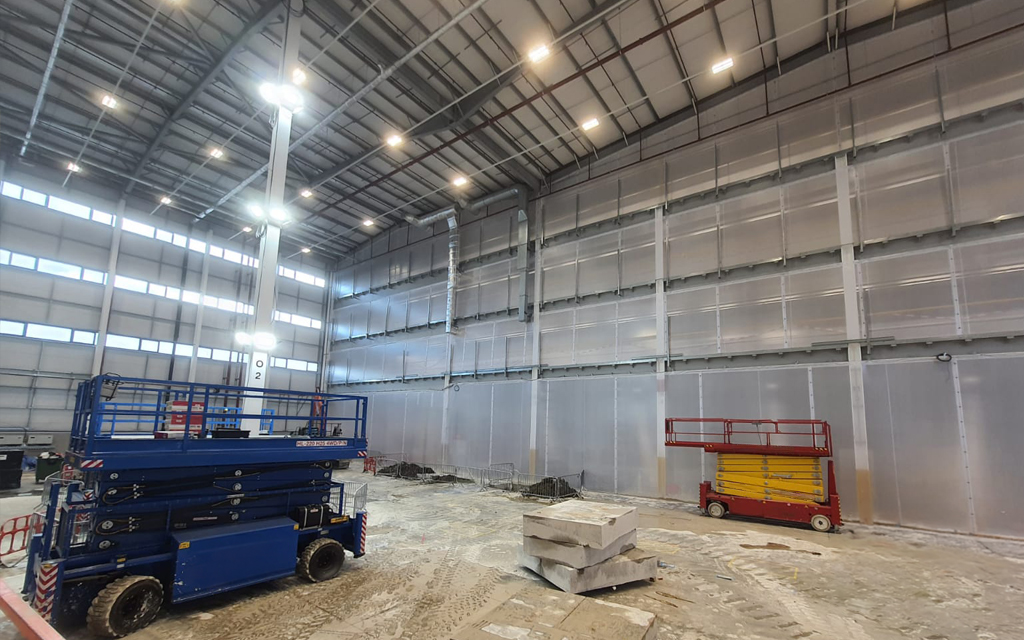
Heat load testing is one of the last hurdles before a data hall goes live and one of the riskiest to run around finished whitespace. Hot aisle containment (HAC) screens solve that by creating temporary hot and cold aisle containment ahead of the permanent fit-out, so cooling performance can be proven under load without touching the completed environment.
The advantage of a temporary HAC screening is precisely that it's temporary. Purpose-built access panels and heat bank openings let test equipment and airflow move exactly where they're needed and because it suspends from the existing steelwork and tensions to the floor rather than fixing into finished surfaces, it does its job without leaving marks on the whitespace. When testing is signed off, the screen comes down cleanly and the permanent containment continues.
For programmes where commissioning can't afford a setback, that's a meaningful safeguard: full heat load validation, real confidence in the cooling design and pristine whitespace handed over exactly as intended.
Protecting live operations during expansion or refurbishment
The hardest brief in this sector isn't a new build, it's expanding or refurbishing a facility that's already live. Every rack next door is running and the work has to happen without a flicker of downtime. There is no margin for dust drift, no tolerance for a breach into the operational hall.
This is where controlled, phased screening earns its keep. An engineered screen seals the works off completely, while roll-up access panels let people, plants and materials move in and out without ever opening the live environment to risk. Construction advances in stages behind the barrier; the data hall keeps serving as though nothing is happening a few metres away.
On a recent expansion beside a fully operational data hall, phased Flexiscreen containment kept active works and live servers rigorously separated. The work was uninterrupted throughout and each completed zone handed back clean.
Choosing the right data centre screening solution
No two data centre programmes screen the same way, so the right solution starts with the right questions. Run through this checklist before you specify:
- Weather, dust, or both? Are you sealing an open envelope against the elements, containing dust around clean works, or managing both across the programme?
- Live or new-build? Is the area fully operational, with uptime to protect, or a new-build shell where the priority is keeping the critical path moving?
- Cleanroom conditions? Does any zone need to hold ISO Class 7 cleanroom standard for sensitive fit-out or equipment?
- Wind exposure? How exposed are the elevations and does the site need project-specific wind load calculations and structural design support?
- Reuse across phases? Will the screen need to be moved, reconfigured or relocated as the works progress?
- Footprint? How much floor space can you spare and would a suspended screen recover ground a scaffold-based alternative would consume?
- One partner or many? Who owns design, installation and sign-off? Is there a single accountable partner, or several suppliers to coordinate?
Not sure where your project lands? Westgate's screening experts can assess your site and specify the right solution and get in touch to talk it through.
FAQs
Can screening be installed while the building is still incomplete?
Screening can be installed on an incomplete building and that's often exactly when it earns its value. A screen can shield an open section before the façade is finished, sealing it against wind and rain so internal works don't have to wait for the envelope to be watertight. The build stays weather-tight where it’s needed and construction continues around it.
How is dust containment used to enable early phased handover?
Sealing a completed zone against the dusty works next door lets that zone be signed off and handed over while the rest of the programme carries on. Turning finished areas into usable, commissioned space months earlier than a single end-of-project handover would allow. We go deeper on this in our dust containment for data centres blog.
Can the same screening system be reused across project phases?
Yes. A modular screen is built to be moved, reconfigured and extended as the works evolve. Sealing an open façade in one phase then relocating to contain dust around fit-out in the next. One system flexes across the programme rather than being stripped out and replaced.
How are wind loads calculated for exposed data centre sites?
Exposed, high-rise elevations need project-specific engineering rather than a standard spec. A proper design process assesses the site's exposure, height and constraints, then runs wind load calculations to select the right panel type and fixings so the screen performs when the weather turns. Our weather protection for data centres blog covers this in full.
Conclusion
Data centre construction leaves no room for the weather, dust or downtime that derail lesser programmes. Get the screening right and every one of those risks is contained: open structures stay weather-tight so the critical path keeps moving. The clean zones stay sealed so sensitive M&E and IT equipment is protected and live data halls keep running through nearby expansion. Making it possible to release the finished zones to the client as soon as possible.
That's the difference an engineered solution makes over scaffold-and-sheet. Westgate Global designs, engineers and installs screening built for exactly these demands, with one accountable partner owning the job from survey to sign-off.
Planning a build, expansion or refurbishment? Get in touch with the Westgate Global team. We'll assess your site and specify the right solution to keep your programme moving.
Related Posts
Insights 24 September 2026