Reliable heat load commissioning for multi-megawatt data centre
A leading global technology company is rapidly expanding its data centre capacity across the UK to meet growing demand for cloud and AI services. On a recent project in London, Westgate Global supported the commissioning of a new multi-hall data centre, where each hall had to be proven and brought online in phases, to meet a tight commissioning programme.
With strict uptime targets to uphold, testing systems before live deployment is critical. Before server cabinets or IT equipment could go into each new data hall, every hall had to be fully heat-load tested using a loadbank to safely simulate the heat a server hall will generate at full capacity. This lets engineers thoroughly test the data centre’s cooling and electrical infrastructure, reducing business risk and expensive service disruptions by validating that the infrastructure can handle expected loads.
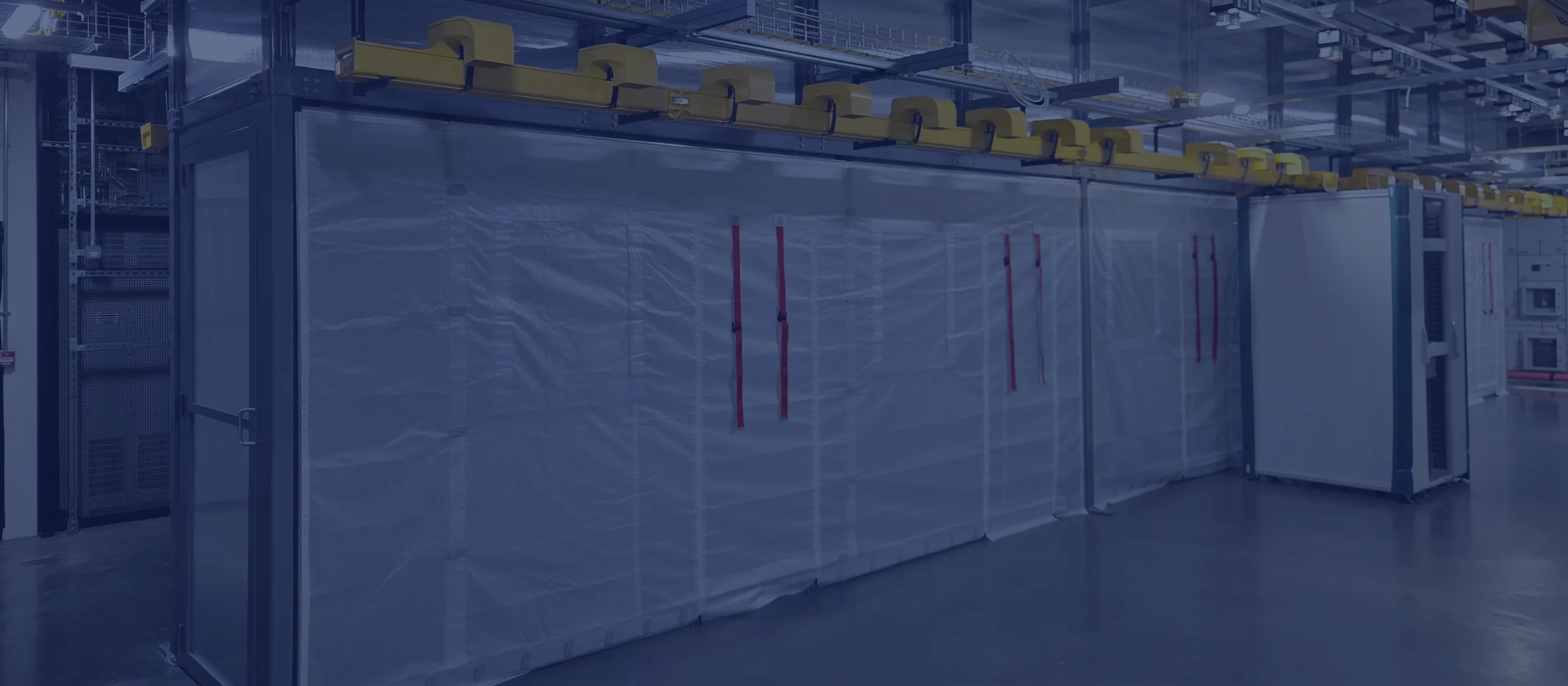
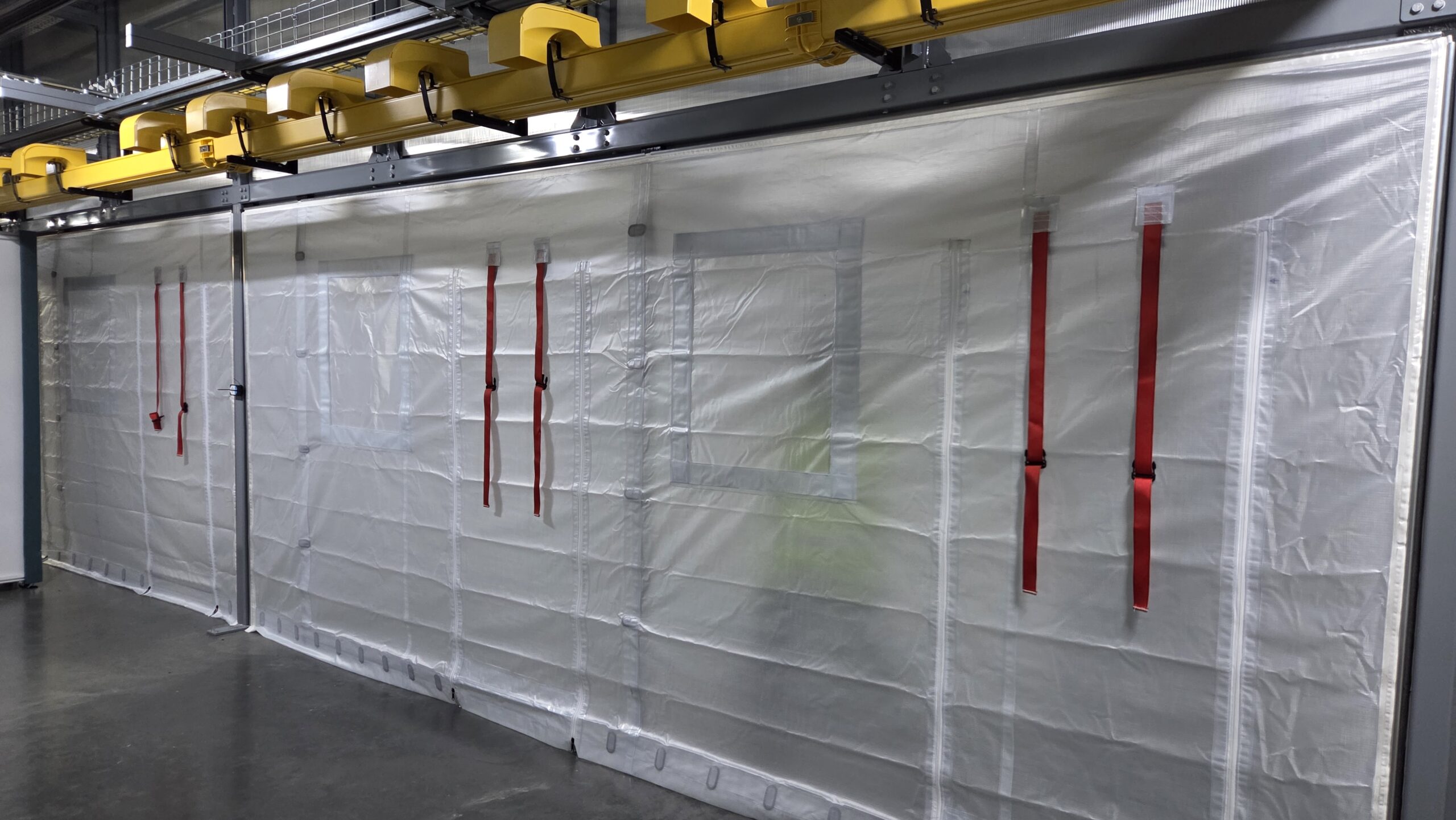
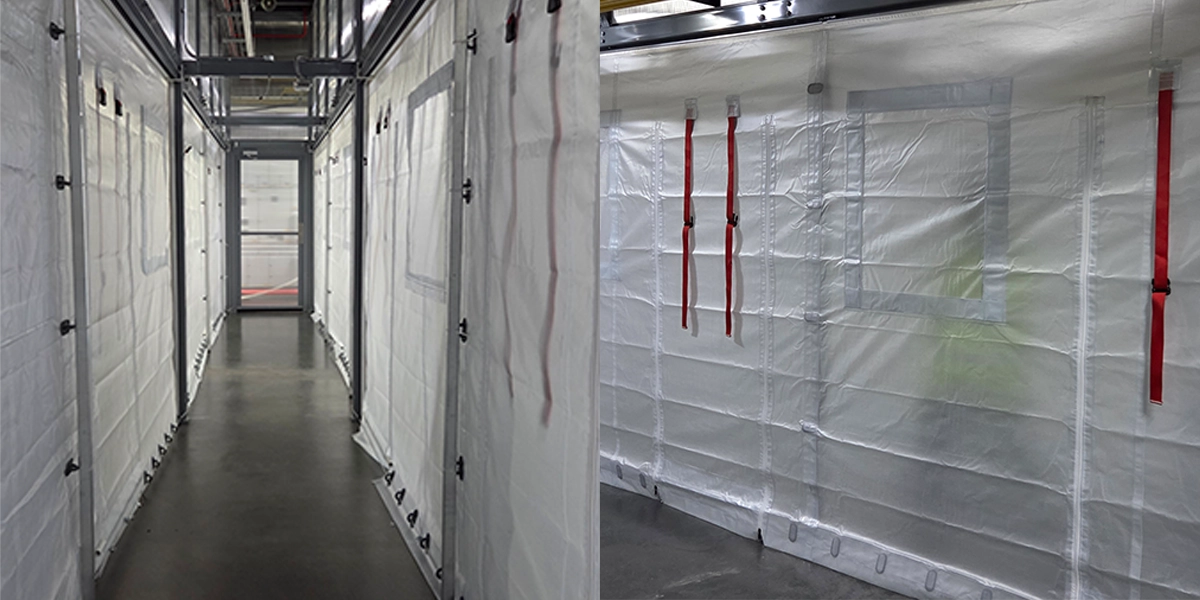
While heat load testing is a critical step in data centre commissioning, results can be skewed if the hot exhaust air mixes with the cold air in the wider hall. Containment solves this by physically separating hot and cold air streams, so the temperatures measured during testing reflect what will actually happen once a live IT load is running in a properly contained environment.
Previous makeshift system skewed test results
In earlier testing, containment around the heat load testing process undermined the test. A previous supplier had created a makeshift solution using Correx sheeting fixed into a frame. The design had low structural integrity, so panels sometimes blew out mid-test, allowing hot air to mix back into the cold aisle/server hall. This led to inconsistent test results, which no longer reflected how the hall would perform under load. Each failure meant tests had to stop and be repeated, adding time to an already tight commissioning programme. Openings for load banks and heaters had to be cut by hand on site and, once cut, the sheeting could be used only once before disposal.
The project team needed containment that would hold firm throughout testing, give engineers easy access to the load banks and heaters, and be reusable on the next hall.