


Internal site rooms vs porta cabins: Which site welfare option is right for your project?
For many construction projects, the porta cabin has been the default answer for temporary site accommodation and site welfare facilities. On live, occupied or space-constrained sites, porta cabins might not be the best choice. Internal site rooms, built within the structure you're already working on, are increasingly the more practical choice for construction and fit-out projects where compound space is tight, the building is occupied, or the accommodation needs to move as the programme progresses.
This guide explores the benefits of internal site rooms as an alternative to porta cabins for site welfare, covering space, logistics, fire and acoustic ratings, and flexibility, so you can work out which suits your next project, and why.
What's the difference between an internal site-room, and a porta cabin?
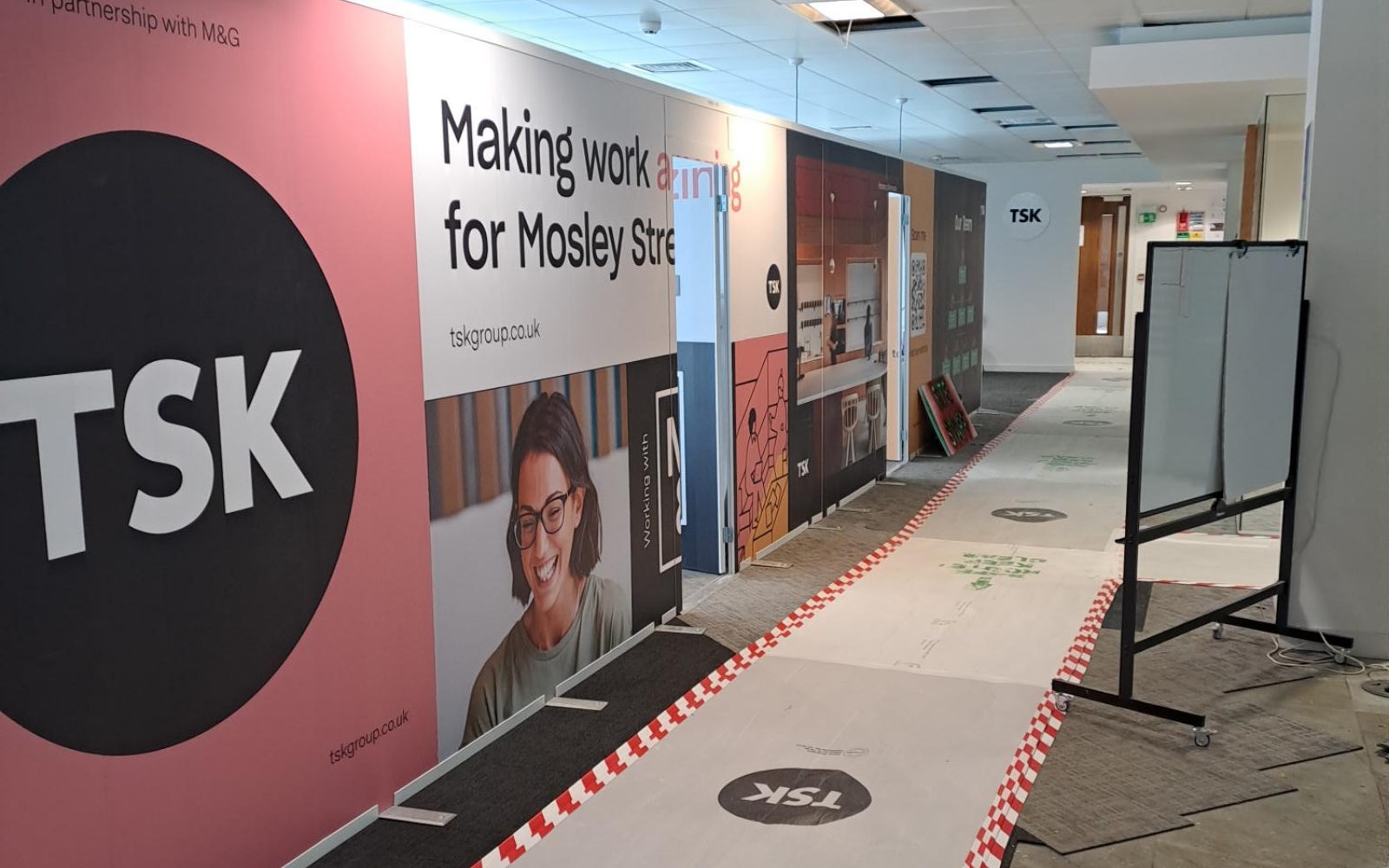
An internal site room is built within an existing building structure, typically using temporary internal hoarding or modular panel systems to create internal offices and welfare facilities. Because they are constructed inside the building envelope/footprint, they benefit from the existing roof, structure, and often the building's own services, and can be shaped to fit awkward or restricted floor spaces where a standalone unit wouldn't fit. Westgate Global’s Hoardfast can be used as office hoarding or to create a wide variety of site welfare facilities including offices, workstations, canteens, toilets, showers, prayer rooms, drying rooms etc.
A porta cabin, by contrast, is a standalone unit manufactured off-site, then delivered and installed on site. It sits externally in the site compound or yard rather than inside the building, connected to temporary power, water, and drainage supplies. Because it's self-contained, it can be brought on site before internal works begin and removed once the project is complete.
In practice, the choice between the two often comes down to space and phasing. Internal site rooms make sense when compound space is limited or when site welfare facilities need to move through the building as work progresses floor by floor.
Internal site rooms vs porta cabins: Comparison table
| Internal site room | Porta cabin | |
|---|---|---|
| Location | Built inside an existing structure, using temporary internal hoarding or modular panel systems. | A standalone unit sited externally in the site compound or yard. |
| Site footprint | Built within the existing footprint, freeing up the compound entirely. The go-to option when there is no room for an external cabin. | Sited in the yard. Can be impacted by space constraints on tight urban or city-centre sites. |
| Delivery & installation logistics | Built in place, with no crane or HIAB delivery needed. Fast to install. | Requires delivery, positioning (often crane/HIAB), and a clear site access route. Likely to need groundworks/a solid base. |
| Insulation & thermal performance | Can be installed from floor to ceiling using insulated partitions that create thermal barriers and prevent heat loss. Also benefits from the protection of the external building envelope. | Higher-spec units will use modern insulation materials that significantly improve thermal performance vs older or cheaper models. Check with your supplier. |
| Acoustic performance | Can achieve an average of 34dB sound reduction when installed floor-to-ceiling. | Typically less sound-insulated, especially cheaper hire units. |
| Installation speed | Quick fit-out within an existing space. | Can also be fast where access and groundworks are straightforward, but dependent on delivery lead times. |
| Flexibility & reconfiguration | Hoarding/panel systems can be dismantled, relocated, and rebuilt as the fit-out moves through phases. | Largely fixed once positioned; moving it means arranging a crane and scheduling the move, or a new hire contract. |
| Planning permission | Not required, since no new external structure is added. | Sometimes required, depending on duration and size. |
| Aesthetics & fit-out | Office hoarding can be client-ready, branded, and matched to office standards (carpet, colour, glazing). | Often functional/utilitarian. Some suppliers offer vinyl wraps, factory powder coating, or specialist painting. This is more common if purchased rather than rented. |
| Fire rating | Fire-rated site welfare, with hoarding panels available in 30-minute and 60-minute fire ratings (EI30 / EI60). | Varies by cabin spec and hire provider. |
| Disruption to live works | Installed around the existing programme while other trades continue. | May need a dedicated laydown/access area, which can disrupt other site activity. |
Space: Why internal site rooms suit restricted or urban sites
Because internal site rooms are built within the existing building's footprint, they are an ideal solution in tight urban or city-centre sites where there is no room for external cabins. In addition to overcoming site space constraints, internal site rooms also work well in built-up areas, because there's no crane access required, no groundworks or base, and no access route required.
On a recent heritage-led development behind the Piccadilly Lights, lead contractor Wates faced very tight access and no room for external welfare cabins. Westgate Global installed 372 linear metres of Hoardfast Firescreen internally across the seven-storey scheme, with the same panels doubling as office hoarding and construction site welfare facilities on one side and external weatherproofing on the other.

Flexibility and reconfiguration: internal site rooms vs external cabins
Construction and fit-out projects often move fast, so flexibility is key. Because an internal site room is built from temporary internal hoarding or modular panel systems rather than delivered as one fixed unit, it can be taken apart, moved, and rebuilt elsewhere as the build progresses. A site office that sits in one part of the building during groundworks can be relocated to support a different phase of the fit-out, without waiting on a new delivery or adding extra cost.
Once a porta cabin is delivered and positioned, moving it means arranging transport again, including arranging a crane or HIAB. For projects with a fixed, single-phase footprint, that is rarely an issue, but for longer or phased fit outs, it can add additional cost and programme disruption. cabin, whereas internal site rooms offer
Installation speed and disruption to live works
When compared with a traditional build, both porta-cabins and internal site rooms are quick and easy to install. An internal site room is fitted around the project's existing programme, and can be constructed quickly without needing a crane delivery or a dedicated access route cleared for it, meaning that work on the rest of the site can continue uninterrupted.
A porta cabin's timeline depends more on outside factors: hire availability, transport, and having clear site access for delivery and positioning, which can be harder to arrange on a live or occupied site. For projects where surrounding works must not be disrupted, including occupied buildings, tight urban sites, or phased refurbishments that must stay on schedule, disruption can be project critical.
Beyond the site itself, having welfare facilities on site, inside the building can reduce disruption and downtime. Workers can access toilets, offices, and break-areas without needing to walk to external facilities, keeping downtime to a minimum and allowing them to maximise any allocated break times.
Fire-rated site welfare: CDM 2015 fire safety and acoustic compliance
Whether you choose an internal site room or a porta-cabin for your construction welfare facilities, the accommodation needs to meet the same fire safety and welfare standards required on any construction site. Internal site rooms built from fire-rated, sound-reducing panel systems can meet fire-safety requirements while also reducing noise transfer from the surrounding works.
Hoardfast Firescreen, for example, is a modular hoarding panel available in 30-minute and 60-minute fire ratings (certified EI30/EI60), while Hoardfast Soundscreen is a quick-to-install acoustic hoarding panel that reduces noise impact and prevents dust spread during internal fit-out and refurbishment projects, providing an average of 34dB sound reduction when installed floor-to-ceiling.
Porta cabins vary more by spec and hire provider, so check the fire rating and acoustic performance rather than assuming it as standard, particularly on hire units.
Comparing the cost of internal site rooms vs porta-cabins
On paper, a porta cabin's hire cost can look straightforward. In practice, delivery, collection, and the length of time the unit is needed all add to the total cost, and none of it is reusable once the project ends. An internal site room, by contrast, is built once within the existing fit-out programme, and can be reused as the project progresses.
For a short, single-phase job, a hired cabin can seem like a simpler and more cost-effective option. For longer or phased projects, once you add delivery, collection, and extended hire charges, building the accommodation often works out as the more economical choice. It is worth having a chat with a supplier about project needs, timelines, and budgets before making a decision.
When a porta cabin still makes sense
Internal site rooms aren't the right fit for every project. On a new-build or greenfield site, there's no existing structure to build an internal room into, so a porta cabin is the practical starting point. Short, single-phase projects where relocation and reconfiguration aren't a concern may also be better served by a straightforward hired cabin than by a bespoke internal build.
Site welfare: A quick decision guide
Choose an internal site room if your project is a fit-out or refurbishment within an existing structure, your site has little or no spare compound space, the accommodation needs to move or be reconfigured as the project progresses, or the works are ongoing, and disruption to live activity needs to be kept to a minimum.
Choose a porta cabin if you're working on a new-build or greenfield site with no existing structure; your compound has spare space; the project is short and single-phase, or you need a facility fast without any fit-out work.
FAQs
- What building site welfare facilities are legally required in the UK? Under the Construction (Design and Management) Regulations 2015 (Schedule 2), everyone working on a UK construction site must have access to toilets, washing facilities, changing and rest areas, and space to eat. The number and type required depend on the size of the site.
- Do you need planning permission for a porta cabin? Not usually, if it's on site for 28 days or fewer and under 100m² in area. Many welfare and site-office cabins also fall under permitted development rights. You're more likely to need permission near listed buildings, in conservation areas, on green belt land, where the cabin affects road access, or if it is a long project, so it's worth checking with the local authority before installing one.
- Do internal site rooms need planning permission? Generally, no. Because an internal site room is built within an existing structure rather than adding a new external one, it typically falls outside the planning permission process altogether. Though it still needs to meet the same fire safety and CDM welfare standards as any other on-site facility.
- Can an internal site room meet CDM welfare requirements? Yes, when it's specified and fitted to the right standard. Fire-rated, sound-reducing panel systems and proper electrics and plumbing mean an internal site room can meet the same CDM 2015 welfare obligations as a porta cabin — toilets, washing, rest and eating space included.
- How long does it take to install an internal site room compared to a porta cabin? Both are fast compared to traditional construction, but an internal site room is typically quicker to get moving because it is built in place around the existing project programme without needing a crane, HIAB delivery, or a dedicated access route. A porta cabin's timeline depends more on hire availability, transport, and site access for delivery and positioning.
- Can an internal site room be reconfigured as a project progresses? Yes. This is one of the biggest practical differences. Site rooms built from temporary internal hoarding can be dismantled, relocated and rebuilt as a fit-out or refurbishment moves through phases, whereas a porta cabin is largely fixed in place once it's delivered and sited.
- Can you hire internal site rooms for site welfare? Yes. Hoardfast internal site rooms are available for site welfare hire as well as purchase, so you can match the arrangement to your project's length and budget. Site welfare facilities hire covers the same range of spaces, including site offices, canteens, toilets, showers and drying rooms. Because the panels can be dismantled and rebuilt as work progresses, a hired system can follow your programme through each phase.
For most live, occupied or space-constrained construction and fit-out projects, an internal site room offers the flexibility, compliance, and cost profile that a standalone cabin can't match. The right choice always comes down to your specific site, programme and budget.
Have a question? Contact our experts who'll be happy to discuss your project, site constraints and the site room options available
Related Posts
Insights 28 October 2026
Modular hoarding: keeping construction sites productive in winter

News 26 October 2026