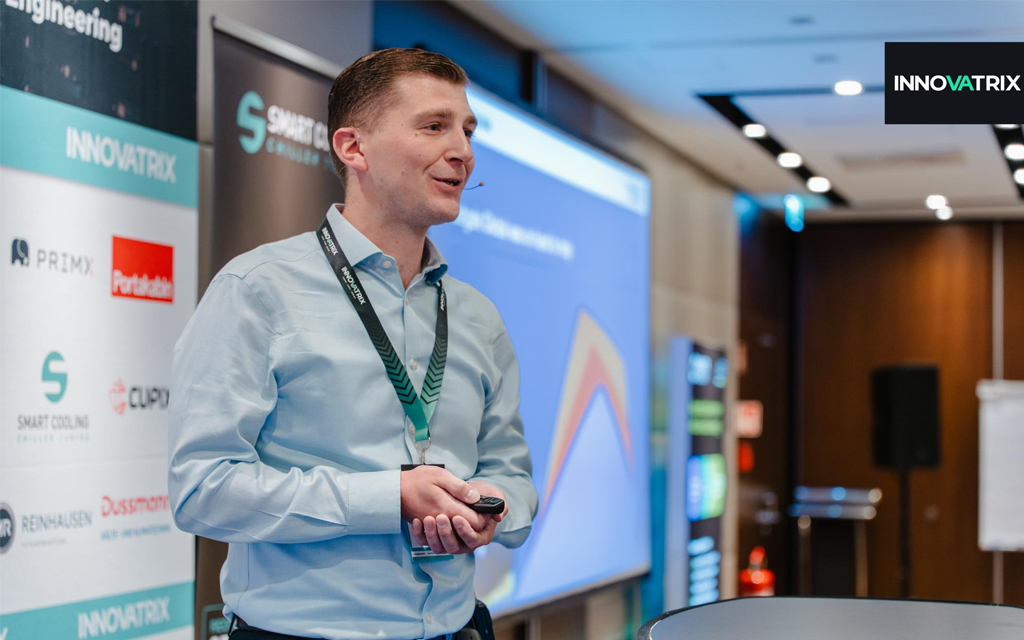
Pulling value forward: reflections from CGDS Berlin by Murray Gates, CEO
I came away from the CGDS Europe conference in Berlin with one reflection that kept coming back: the data centre sector is not short of innovation, it’s short of time.
The event, hosted by Innovatrix, brought together people who are directly involved in delivering mission-critical projects under real pressure. Over the two days, the same themes kept surfacing. Demand is growing, programmes are tight, expectations around resilience, performance and data sovereignty are rising. Yet the way projects are designed and built does not always leave enough room for new thinking to land in time.
That is the tension.
Innovation moves quickly. Construction doesn’t always have the same freedom. An idea discussed today may only show up in a completed facility two or three years from now. By then, the next challenge may already be in front of us.
There was also a good point made around lessons learned. We talk a lot about capturing and tracking them but on fast-moving programmes the next project is often already designed before those lessons can be properly used. So, the industry keeps learning, but it’s not always able to implement those learnings quickly enough to benefit the next project.
That matters, especially in data centres, where a few days can change the commercial picture.
Weather is still not being measured properly
My presentation focused on something very practical: the cost of weather impacts.
Most project teams know weather causes disruption. Rain, wind and poor conditions affect productivity, sequencing, access, quality and safety. No one on site needs to be told that but knowing it’s a risk is not the same as measuring it.
On many mission-critical programmes, weather is still treated as something to manage when it happens. A delay here, a missed sequence there, a trade held back, a section not ready. Internal works pushed out again.
Individually, these things can look manageable. Across the programme, they become expensive. When the true cost is measured, it is often bigger than the cost of mitigating for it.
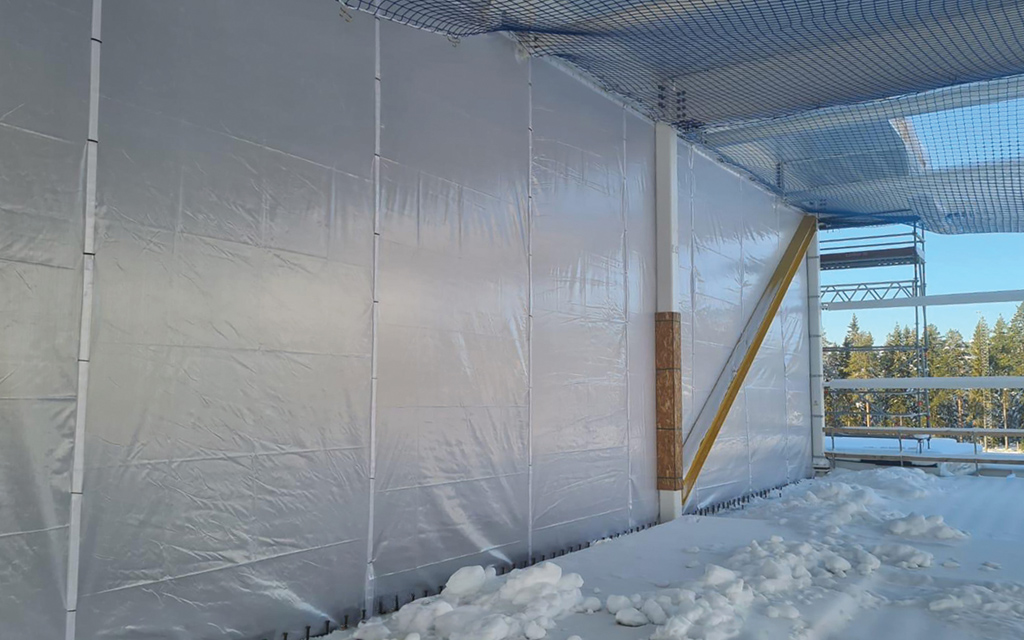
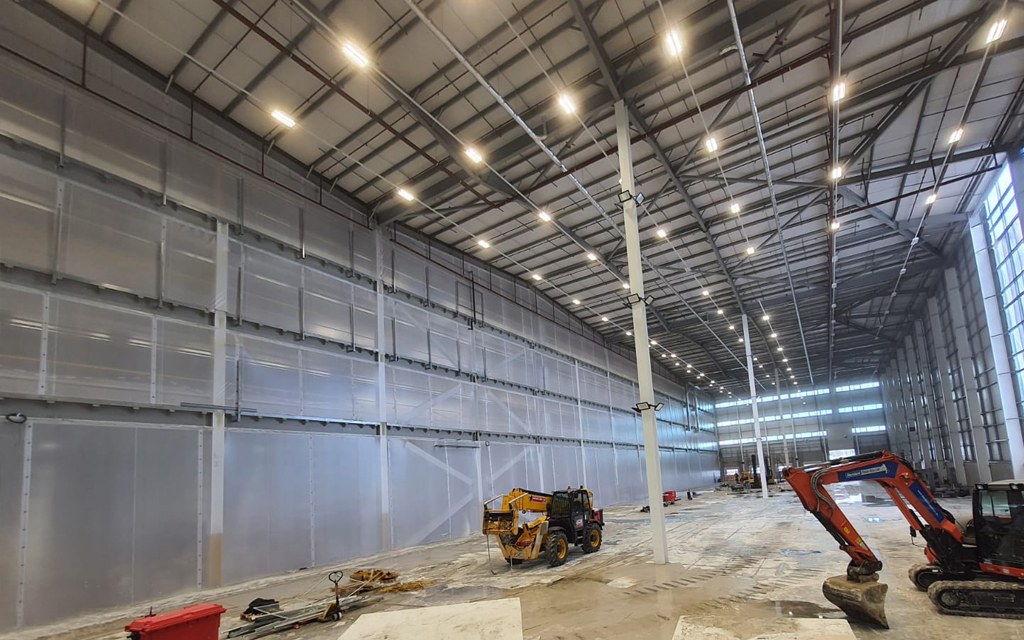
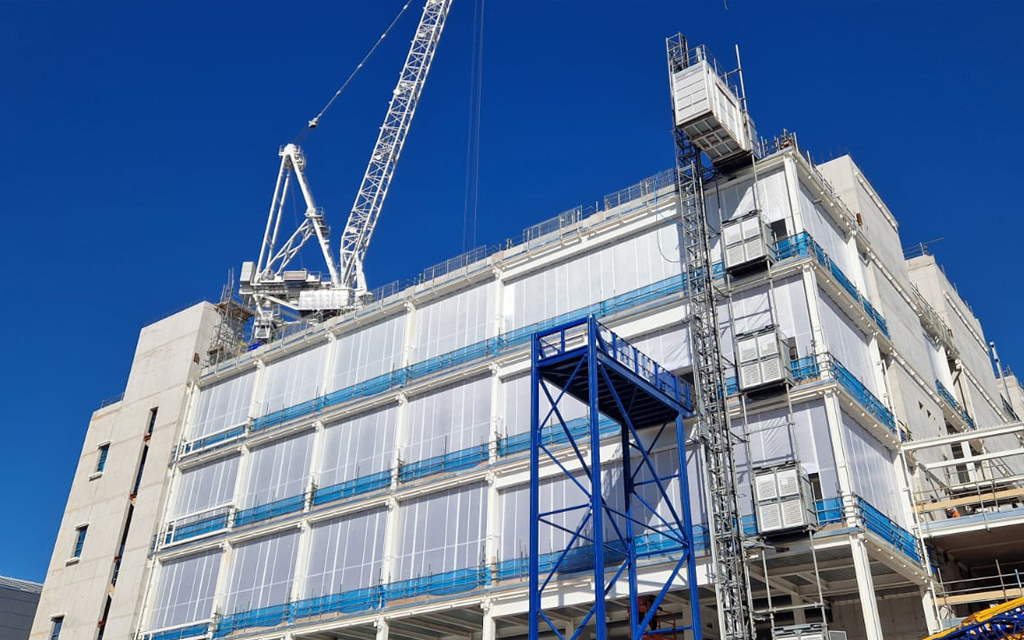
That’s the basis of what I discussed in Berlin. Engineered weather screening isn’t just protection and an additional cost line. Planned properly and planned early, it becomes a programme tool.
The right weather protection ensures concrete pours happen as scheduled regardless of the cold, keeps trades work in parallel and allows internal works to start sooner. It gives project teams more control over site conditions instead of constantly reacting to them.
That shift is important because in this sector, time is revenue, pressure, risk and reputation.
Insurance policy or programme enhancer?
One of the best questions after the presentation was whether engineered weather screening is really an insurance policy for the contractor or a programme enhancer for the end user.
The honest answer is both.
For the contractor, it protects progress, giving the team a better chance of keeping work moving when the weather turns. It reduces disruption and makes sequencing easier to control.
For the asset owner, the value can be much bigger because the goal is not only avoiding delays it’s also pulling revenue forward. If internal works do not have to wait for the full cladding critical path to complete, the handover date can move closer. With a data centre operational early, the asset starts earning sooner.
Some innovation needs a safer place to prove itself
Another theme that stayed with me was the risk attached to innovation.
Innovation sounds positive and it usually is but on a live, time-critical campus, it can feel uncomfortable. It asks people to move away from what they already know and introduces questions which can, in turn, create nervousness. When the deadline is already tight, the safe option often wins.
It’s not difficult to understand. No one wants to take unnecessary risks on a mission-critical programme. Certainty and reliability matter but there is also a cost to always choosing the familiar option. Some ideas will save far more time than they take to prove and the challenge is giving them a route in.
That may mean testing new approaches on non-live projects. It may mean using pilot areas. It could also mean involving operators earlier, before designs are too far ahead. Not every useful idea needs to be proven for the first time under maximum pressure.
Planning in weathering is a good example. It’s not a radical concept but it does need to be considered early. Bring it in late and it becomes a reactive measure. Plan it from the start and it can influence sequencing, access, trade overlap and handover. It can change the shape of the programme.
The pressure is not easing
The wider conversations in Berlin made it clear that the pressure on data centre delivery is not going away.
Data sovereignty is a major theme in Europe and it’s adding another layer to an already strong demand picture. More capacity is needed and the expectation is that it must be delivered quickly, securely and responsibly.
At the same time, technical requirements are changing. We heard strong discussions around areas like liquid cooling as the sector responds to higher-density environments and new performance demands.
These are important shifts but whether we are talking about cooling, resilience, programme sequencing or site conditions, the same question sits underneath it all.
How do we bring better ideas into projects without creating more risk than we remove?
That is where the work is.
Protecting momentum
At Westgate Global, we talk a lot about protecting momentum. CGDS Berlin reminded me why that matters.
Momentum is not just about keeping people busy on site. It’s about making sure the right work can happen at the right time. Removing friction before it turns into delay.
My reflection from CGDS Berlin is that the industry is ready for a more practical conversation about innovation, encouraging useful changes that help teams deliver faster, safer and with more control.
If we can measure the real cost of delay, plan earlier for the risks we already know about and give good ideas a safer route into projects we can do more than protect programmes, we can pull value forward.
Related Posts